You’ve sealed the deal. The numbers look good. The supplier sent photos of clean, white bales and quoted a price per metric ton (MT) so good that you’re overjoyed at your profit.
Now imagine this: Thirty days later, a dock worker opens your container. The first thing he smells is a foul odour. Not garlic, but something worse – the sour, fetid stench of anaerobic rot; like a compost heap sealed in a steel coffin under the tropical sun. He recoils. Inside, there are damp, spongy, soft cloves covered in black mould. Your thousands of dollars’ worth of investment in bulk garlic has now become toxic agricultural waste.
This isn’t a rare disaster. It’s a daily occurrence in the global garlic import trade.
The container isn’t just a ship. It’s a biological battlefield. And right now, without the right garlic supplier, your garlic is losing the battle – slowly, quietly; 200 nautical miles from any port where anyone can rescue it.
Garlic container shipping problems are destroying bulk garlic imports from India every single day.
Are You Still Buying “Dead” Garlic? | The Problem with Cheap Indian Garlic Exporters
Walk around half the processing yards in Shandong or Madhya Pradesh. What do you see? Freshly harvested bulbs, spread out on bare ground, basking in direct sunlight at temperatures of 45°C or more.
Farmers call this “desiccation.” Scientists call it cellular necrosis.
What actually happens is this: the extreme heat at the surface scorches the bulb’s outer biological structure. The natural moisture balance, the pressure difference that keeps a living bulb strong, firm, and chemically active, is completely disrupted. On the first day, the garlic looks perfect. A uniform colour. A clean peel. It even looks beautiful in photographs.
But inside, its immune system is dead. Those enzymatic defences that normally fend off microbial attacks? They’re gone. What you’re loading onto a ship is essentially a defenceless biological mass, with a 30-day countdown already underway. This is fresh garlic export done fatally wrong.
AGRINOVA FOODS – a fully integrated garlic exporter from India – doesn’t “dry” the garlic. We create a state of “biostasis” in it.
Our special “Slow-Curing” protocol uses a temperature-controlled shade drying method, with precise adjustments to the humidity level. We don’t destroy the bulb’s biological integrity. Instead, we put it to sleep, suspending its metabolism, while its protective shell remains completely intact. Our live garlic bulbs maintain natural cellular pressure and resist decay for up to days and months after arrival. This isn’t a claim. This is certified post-shipment shelf data.
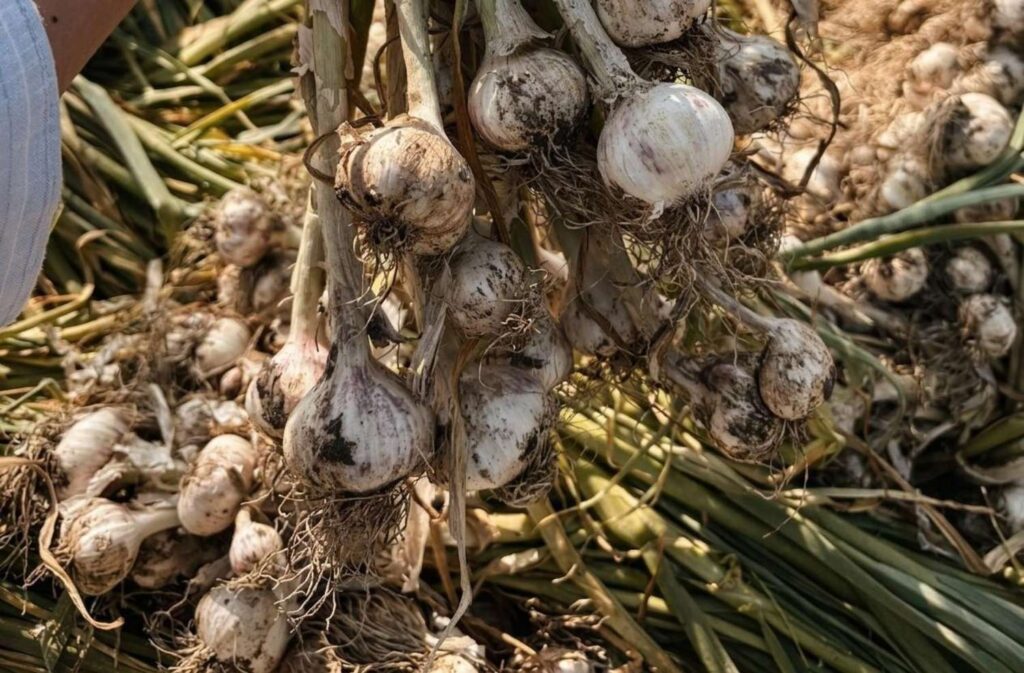
Garlic Container Shipping Problems – Are You Importing Tons of Dead Carcasses?
Garlic breathes. Even after harvesting, it remains metabolically active and emits ethylene gas as part of its natural senescence process. This isn’t a problem. It’s biology.
The problem is the garlic container shipping setup.
Cheap, standard dry containers with closed or inadequate ventilation trap ethylene. Concentrations build up. Sensing the hormonal signals of rapid ageing, the bulb exhibits its only known response: it sprouts, or worse, it switches to anaerobic respiration. Without sufficient oxygen, the inner clove tissue begins to ferment from the inside out, a process called hollow heart. You open a garlic clove that looks fine from the outside, but inside you find a wet, brown, translucent sponge where a solid clove should be.
You’ve imported gas-contaminated garlic. Tonnes of it. This is what poor garlic ocean freight management looks like.
We only use refrigerated containers to transport our garlic long distances. Our team understands what it means to lose and thus takes every step necessary to ensure the product reaches you in pristine condition.
Understanding garlic container shipping problems is the first step to protecting your investment.
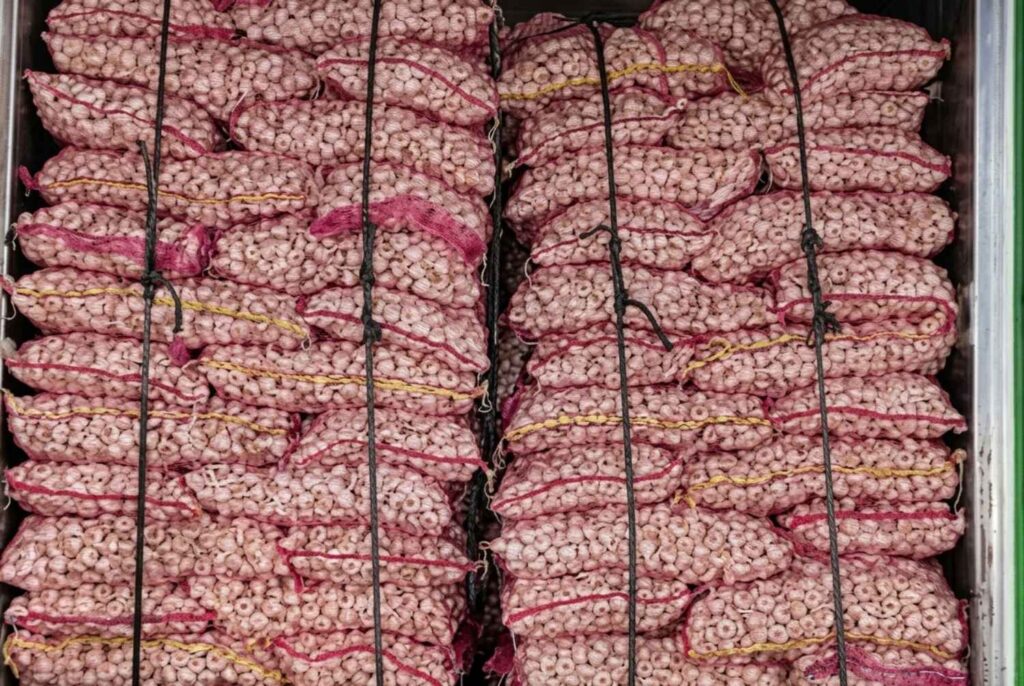
Garlic Mold in Ocean Shipments – A Fungal Time Bomb
Aspergillus niger. Black mould. The organism that turns a garlic container into a biohazard.
Here’s the chain reaction no one talks about: Sun-dried garlic harbours fungal spores from the soil. Shipping goods by sea creates what engineers call “container sweat” – cyclical fluctuations in humidity. When steel walls cool at night and heat up during the day, moisture condenses and settles on the surface of the cargo. This moisture activates those dormant spores. In a closed container, with no airflow and heat? Mould spreads rapidly. Black, powdery mildew spreads across pallet after pallet like soot on snow.
Your customs inspection will fail. Your buyer will cancel the deal. Your $50,000 garlic shipment will be destroyed at your own expense.
The leading wholesale garlic suppliers in the world have solved this. Agrinova’s answer is what we call the ‘Parchment Shield.’ We never use land for drying. Our warehouse floors are covered with gunny bags, on which we lay the garlic down with controlled airflow, creating a dry and structurally strong outer layer that withstands sea humidity. During this process, we also process the garlic cleaning requirements for the target country. No residual soil. No dormant spores. No ‘black lung.’ This is what genuine export garlic quality control looks like.
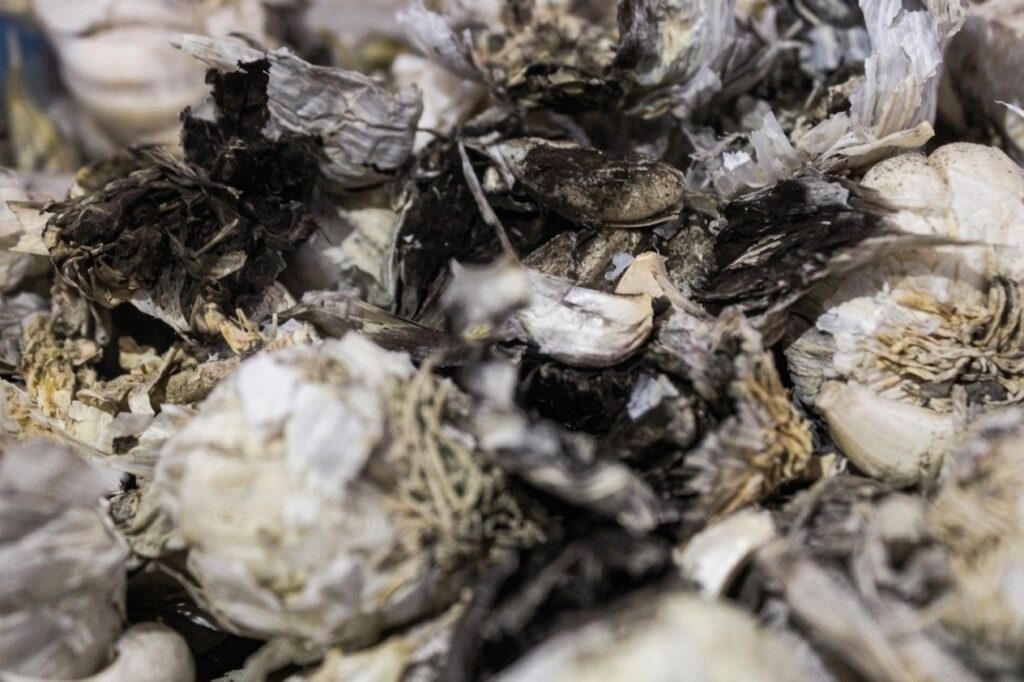
The Truth About Wholesale Garlic Suppliers in India – It’s Not What You See
There’s an entire ecosystem of Indian garlic “exporters” who operate from a smartphone and a WhatsApp group. No processing facilities. No cold chain. No quality control. No Garlic experience. These are not bulk garlic suppliers. They are middlemen.
They scurry around local mandis, open-air commodity markets, and combine batches of garlic from multiple farms, multiple varieties, and varying moisture content. The result is what’s known in the trade world as a “mandi mix”: a container filled with garlic bulbs of varying sizes, varying curing times, and varying microbial loads. It ships. It arrives. And it fails customs inspection.
You paid to buy garlic in bulk. You got a rejected container and a lesson.
AGRINOVA FOODS is a fully vertically integrated garlic exporter from India. We control the soil. We control the harvest. We control the cold chain. Everything that arrives at our processing facility is linked to a specific farm block. There’s no gap in this chain where someone else’s inferior product could contaminate yours. This is what true vertical integration in Indian garlic export looks like.
Our commitment to that standard isn’t just operational – it’s ingrained in our very identity. Our distinctive branding isn’t just an aesthetic choice. It’s a declaration: the deep, unbroken colour of a living farm; the colour of supreme agricultural sustainability; and the colour of a fresh garlic supplier who has never shipped a container they’re not willing to stake their reputation on.
Don’t let garlic container shipping problems cost you another rejected shipment.
Conclusion: Stop Gambling with Your Garlic Import Business
Stop shipping garbage. Stop risking your working capital on suppliers who have never even stepped inside a cold storage facility. The “cheap deal” will prove to be your most expensive decision this year.
Every day you source from a faulty supply chain, you incur losses – in the form of rejections, replacements, and loss of reputation with your own buyers – that far outweigh the money saved on the per-MT price. Global garlic importers who work with an unreliable bulk garlic supplier always pay twice.
Contact AGRINOVA FOODS today. Get a unique quote tailored to your destination, your quantity, and your timeframe. Stop suffocating your profits inside a steel box in the Indian Ocean.
Your garlic should arrive alive. With AGRINOVA FOODS – India’s most trusted garlic exporter – that’s exactly what happens.